Reserva Ecológica Costanera Sur

Sitio realizado por aficionados a la observación de aves desde 10 de enero 2006

Browsing Posts in Form and Function

Fawn-breasted Tanager
Pipraeidea melanonota Saíra de antifaz/Fawn-breasted Tanager© J. Simón Tagtachian
Freckle-breasted Thornbird
Phacellodomus striaticollis Espinero pecho manchado/Freckle-breasted Thornbird© J. Simón Tagtachian
Ultramarine Grosbeak
Cyanocompsa brissonii Reinamora grandeM/Ultramarine GrosbeakMMale
© Carlos Gonzalez Ledo
Great Grebe
Podiceps major Macá grande/Great Grebe© J. Simón Tagtachian
Black-hooded Parakeet
Nandayus nenday Ñanday/Black-hooded ParakeetEating the fruit of Melia azederach
© Milano-Muszkats
Roadside Hawk
Buteo magnirostris Taguató común/Roadside Hawk© J. Simón Tagtachian
Sooty-fronted Spinetail
Synallaxis frontalis
Pijuí frente gris/Sooty-fronted Spinetail© J. Simón Tagtachian

A spinetail with a featherless tail
It is strange to see a bird with a featherless tail. Generally one or two feathers may be missing when birds are molting but not all of them at the same time. This massive feather molt may occur as a response to the fact of being grabbed by the tail by a predator. The bird sacrifices its tail, but saves its life. It is believed that there must be a relaxation of the muscles holding the feather which causes its detachment. As the whole piece is lost, the feather grows back right away. This molt is known as shock molt or fright molt. This phenomenon has also been reported in cases with birds being handled and has been registered after catastrophic events. CR

New bird species: Suiriri Flycatcher
Suiriri suiriri
Suirirí común/Suiriri Flycatcher© J. Simón Tagtachian
Vermilion Flycatcher
Pyrocephalus rubinus
ChurrincheM/Vermilion FlycatcherMThe males are arriving
© J. Simón Tagtachian
Red-rumped Warbling-Finch
Poospiza lateralis
Monterita litoraleña/Red-rumped Warbling-Finch© J. Simón Tagtachian Monterita litoraleña/Red-rumped Warbling-Finch© J. Simón Tagtachian
Hepatic Tanager
Piranga flava
Fueguero comúnH/Hepatic TanagerFFemale
© J. Simón Tagtachian
Fueguero comúnH/Hepatic TanagerFFemale
© J. Simón Tagtachian
Speckled Teal
Anas flavirostris
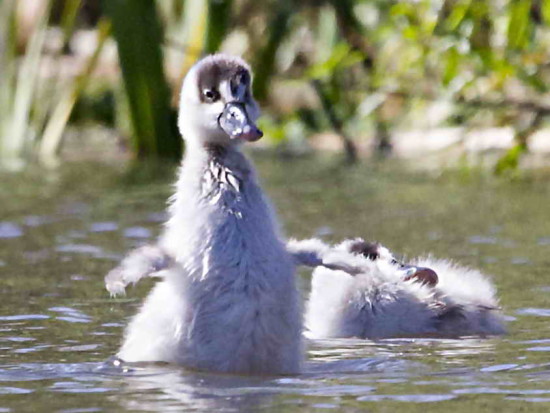
Pato barcinoR/Speckled TealRHow nice to see at least one family of ducks at Costanera! A scene so common not so long ago!
© J. Simón Tagtachian
Water in the Coypu Pond
agua en Coipos/Water in Coypu PondSee more photos on www.siyc.com.ar/fotonaturaleza/historia/fotos.php?archivo=20120818.inc
© J. Simón Tagtachian
Ferruginous Pygmy-Owl
Glaucidium brasilianum
Caburé chico/Ferruginous Pygmy-Owl© J. Simón Tagtachian Caburé chico/Ferruginous Pygmy-Owl© J. Simón Tagtachian
An atypical Ferruginous Pygmy-Owl with grey face (?)
Red-rumped Warbling-Finch
Poospiza lateralis
Monterita litoraleña/Red-rumped Warbling-Finch© J. Simón Tagtachian
Snowy-crowned Tern
Sterna trudeaui
Gaviotín lagunero/Snowy-crowned Tern© J. Simón Tagtachian
Limpkin
Aramus guarauna
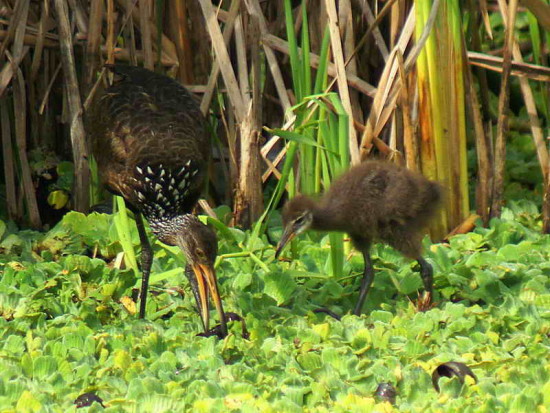
Caraú/Limpkin© J. Simón Tagtachian
Hooded Siskin
Carduelis magellanica
Cabecitanegra común/Hooded SiskinA small flock.
© J. Simón Tagtachian
Cattle Tyrant
Machitornis rixosa
Picabuey/Catle Tyrant© J. Simón Tagtachian
Shiny Cowbird
Molothrus bonariensis
Tordo renegrido/Shiny CowbirdFemale and male
© J. Simón Tagtachian
White-tipped Dove
Letotila verreauxi
Yerutí común/White-tipped Dove© J. Simón Tagtachian
Whistling Heron
Syrigma sibilatrix
Chiflón/Whistling Heron© J. Simón Tagtachian
Speckled Teal
Anas flavirostris
Pato barcino/Speckled Teal© J. Simón Tagtachian
Red-fronted Coot
Fulica rufifrons
Gallareta escudete rojo/Red-fronted Coot© J. Simón Tagtachian
Blue-billed Black-Tyrant
Knipolegus cyanirostris
Viudita pico celesteH/Blue-billed Black-TyrantFFemale. Rectrices edged rufous
© J. Simón Tagtachian
Green-winged Saltator
Saltator similis
Pepitero verdoso/Green-winged Saltator© J. Simón Tagtachian Pepitero verdoso/Green-winged Saltator© J. Simón Tagtachian
Same juvenile a week later
White-rumped Swallow
Tachycineta leucorrhoa
Golondrina ceja blanca/White-rumped SwallowSeen two weeks ago but photographed only yesterday. A small group of 5 individuals was flying around. The first to arrive.
© Furman-Bastías
Brown-hooded Gull
Chroicocephalus maculipennis
Gaviota capucho café/Brown-hooded GullThe breeding season comes and we note that birds are more active. They seem to wake up.There are chases, displays, increase in vocalizations, etc. and there are also changes in their appearance, many of which pass unnoticed to the untrained eye. But the nuptial or alternate plumage leaps to the eye. This gull’s nuptial or alternate plumage is a brown hood which covers its head, which is practically white in its basic (also called winter) plumage.
These changes are due to the preparation of the reproductive system for a new breeding cycle. Environmental factors such as day length, light intensity, temperature, etc regulate the activity of the pituitary gland which segregates the hormones which stimulate these changes. Late in the reproductive season these hormones are inhibited by others which curb all this efervescence till the next cycle.
© J. Simón Tagtachian
Striped Owl
Asio clamator
Lechuzón orejudo/Striped Owl© Milano-Muszkats
Campo Troupial
Icterus jamacaii
Turpial/Campo Troupial© Milano-Muszkats
VN:F [1.9.22_1171]
Rating: 10.0/10 (6 votes cast)
VN:F [1.9.22_1171]
Rating: +3 (from 5 votes)
Brown-chested Martin
Progne tapera
Golodrina pardaR/Brown-chested MartinR
Golodrina pardaR/Brown-chested MartinR Golodrina pardaR/Brown-chested MartinR
Fotos © J. Simón Tagtachian

Two martin fledgelings wait for their parents to bring some food. A fledgeling is a young bird which has left the nest. It is feathered but is still cared for by the parents. An evident characteristic is the enlarged oral flanges at the base of the bill. This structure is enlarged integumentary tissue which passerine chicks have when they hatch and decreases as the young grows. It is normally yellow and it will be more or less bright depending on how well lit the nest is. It is believed to arouse parents to feed the young and to serve as a food target to place it properly. They differ in colour from their parents. Fledgelings are grayish whereas the adult is brown.
CR

New Butterfly species: Ivory
Eunica eburnea
Satinada Grande/Ivory© Silvia Vitale Satinada Grande/Ivory© Silvia Vitale
Many-colored Rush-Tyrant
Tachuris rubigastra
Tachurí sietecolores/Many-coloured Rush-Tyrant© J. Simón Tagtachian
White-lined Tanager
Tachyphonus rufus
Frutero negroJ/White-lined TanagerJJuvenile male
© Paula Milano y Juan Pablo Muszkats
Camponotus mus
Hormiga carpintera/Camponotus mus
Camponotus mus is black and has short, erect hairs covering all the body. Its abdomen has longer and flattened hairs, which give it a golden colouring. Carpenter ants do not consume wood. They collet sucrose solutions from plants and aphids.


The mound of sawdust was not fortuitous. This was part of the material removed by these ants which were hollowing out the trunk of this live tree. The rest was scattered on the ground.
As long as we stayed there they kept dumping material continuously. They emerged out of the hole, reached the edge, emptied the load and went back. Sawdust was of different sizes, sometimes as long as the ant itself. We put a finger near one of them to have a size reference point. It stayed montionless and showed no aggressiveness. Neither were they aggressive when the earwing passed by. Nevertheless the visit of a wasp did not pass unnoticed. Unluckily the action was not filmed, but the ants near the scene attacked the wasp in unison. The day before a wasp had been laying eggs in the surroundings.

Video © Roberto Ares – Texto: Cora Rimoldi

New Butterfly species: Arawacus ellida
Élida/Arawacus ellida© Roberto Ares Élida/Arawacus ellida© Roberto Ares
New Butterfly species: Big Lazy
Actinote pyrrha
Perezosa grande/Big Lazy© J. Simón Tagtachian Perezosa grande/Big Lazy© J. Simón Tagtachian
Burst of butterflies at RECS
1 – Southern Buckeye Junonia genoveva hilaris
2 – Fiery Skipper Hylephila phyleus
3 – Claudina Crescent Tegosa claudina
4 – Bella Mapwing Hypanartia bella
5 – Southern Fritillary Euptoieta hortensia
6 – Gulf Fritillary Agraulis vanillae maculosa
7 – Common Lazy Actinote pellenea
8 – Common White-milk Tatochila autodice
9 – Big Lazy Actinote pyrrha
10 – American White-milk Tatochila mercedis vanvolxemii
11 – Southern Monarch Danaus plexippus erippus
12 – Lesbia Sulfur var. heliceoides Colias lesbia
13 – Lyssipoides Metalmark Riodina lyssipoides
14 – Lesbia Sulfur Colias lesbia
15 – Celmis Satyr Ypthimoides celmis
16 – Caulonia Groundstreak Calycopis caulonia
17 – Argentine Checkered Skipper Pyrgus orcynoides

© JST (J. Simón Tagtachian) – © RU (Rosana Ursino)

Limpkin
Aramus guarauna
Caraú/Limpkin© Pablo Serur
American Kestrel
Falco sparverius
Halconcito colorado/American Kestrel© Pablo Serur
Many-colored Rush-Tyrant
Tachuris rubigastra
Tachurí siete colores/Many-coloured Rush-TyrantJuvenile
© Pablo Serur
Black-capped Warbling-Finch
Poospiza melanoleuca
Monterita cabeza negra/Black-capped Warbling-Finch© Pablo Mosto
Blue-billed Black-Tyrant
Knipolegus cyanirostris
Viudita pico celesteH/Blue-billed Black-TyrantFemale (photo taken in February)
© Paula Milano – Juan Pablo Muszkats
Camuati Wasp
Polybia scutellaris

There is an action between two camuatis which is solved by means of circular figures accompanied by vigorous wing beating. Communicational or confrontational act?

Video © Roberto Ares – Text: Cora Rimoldi
Read article

White-faced Ibis
Plegadis chihi
Cuervillo de cañada/White-face Ibis© Pablo Serur
More juveniles
Harris’s Hawk
Parabuteo unicinctus
Gavilán mixtoJ/Harris's HawkJ© Pablo Serur
Rusty-collared Seedeater
Sporophila collaris
Corbatita dominóJ/Rusty-collared SeedeaterJ© Pablo Serur Corbatita dominóJ/Rusty-collared SeedeaterJ© Pablo Serur
Checkered Woodpecker
Veniliornis mixtus
Carpintero bataraz chicoM/Checkered WoodpeckerMNest currently under construction
© Rosana Ursino
Fawn-breasted Tanager
Pipraeidea melanonota
Saíra de antifaz/Fawn-breasted TanagerAnd now an adult
© Pablo Mosto
Getting ready to leave
Brown-chested Martin
Progne tapera
Golondrina parda/Brown-chested Martin© J. Simón Tagtachian
White-winged Becard
Pachyramphus polychopterusAnambé comúnH/White-winged BecardFFemale
© J. Simón Tagtachian
White-winged Becard
Pachyramphus polychopterusAnambé comúnM/White-winged BecardMMale
© J. Simón Tagtachian
Juveniles
Blue-and-yellow Tanager
Thraupis bonariensisNaranjeroJ/Blue-and-yellow TanagerJJuvenile
© J. Simón Tagtachian
Roadside Hawk
Buteo magnirostrisTaguató comúnJ/Roadside HawkJ© J. Simón Tagtachian
Glittering-bellied Emerald
Chlorostilbon aureoventrisPicaflor comúnJ/Glittering-bellied Emerald© J. Simón Tagtachian
Rufescent Tiger-Heron
Tigrisoma lineatumHocó coloradoJ/Rufescent Tiger-HeronJ© J. Simón Tagtachian
VN:F [1.9.22_1171]
Rating: 7.0/10 (7 votes cast)
VN:F [1.9.22_1171]
Rating: +3 (from 5 votes)
Great Kiskadee
Pitangus sulphuratus
Benteveo común/Great Kiskadee© Carlos Gonzalez Ledo
Neotropic Cormorant
Phalacrocorax brasilianus
Biguá/Neotropic Cormorant© Carlos Gonzalez Ledo
Spot-flanked Gallinule
Gallinula melanops
Pollona pintada/Spot-flanked GallinuleAdulto con dos crías muy pequeñas.
© Claudia y Tito Di Mauro
Spot-flanked Gallinule
Gallinula melanops
Pollona pintada/Spot-flanked GallinuleJuvenil
© Claudia y Tito Di Mauro
Striated Heron
Butorides striatus
Garcita azulada/Striated Heron© Carlos Gonzalez Ledo
Rufescent Tiger-Heron
Tigrisoma lineatum
Hocó colorado/Rufescent Tiger-Heron© Carlos Gonzalez Ledo
Masked Duck
Nomonyx dominica
Pato fierro/Masked DuckFemale
© Claudia Furman
Tropical Kingbird
Tyrannus melancholicus
Suirirí real/Tropical KingbirdFirst Kingbird photographed in the reserve
© Claudia Furman
Vermilion Flycatcher
Pyrocephalus rubinus
Churrinche/Vermilion FlycatcherMale
© Carlos Gonzalez Ledo
Solitary Cacique
Procacicus solitarius
Boyero negro/Solitary CaciqueThe same technique with an unusual meal. It inserts the bill and opens it to tear the piece of bread apart.
© Roberto Ares
Scarlet-headed Blackbird
Amblyramphus holosericeus
Federal/Scarlet-headed Blackbird© Claudia y Tito Di Mauro
White-faced Whistling-Duck
Dendrocygna viduata
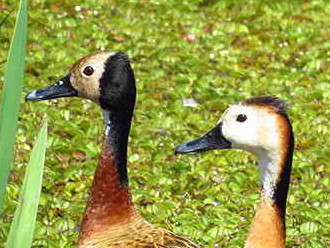
Sirirí pampa/White-faced Whistling-DuckTwo structural characteristics of sievers can be identified in the bill of this White-faced Whistling-Duck. A flared maxilla at the tip and a highly developed nail. Sievers feed separating food particles from the water. The lamellae, thin plates which line the edges of the bill, function like a strainer. They let water out and retain material food.
© José Luis Merlo
Spot-flanked Gallinule
Gallinula melanops
Pollona pintada/Spot-flanked GallinuleCourtship display: The female stimulates the male showing receptiveness. With the back arched, the rigid wings a bit raised as if touching the tips at the back and the head lowered. The male perceives the female´s disposition and follows her.
They engage in a merry-go-round movement and after three turns the female stops to be mounted.
© Roberto Ares
Spot-flanked Gallinule
Gallinula melanops
Pollona pintada/Spot-flanked GallinuleThe female does not dip the head into the water. As the action is finished the female goes away with a wing shuffling. The male makes a bow display arching his body and lowering the head.
© Roberto Ares
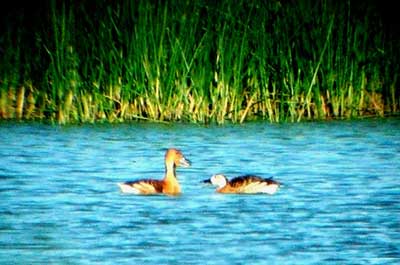
Fulvous Whistling-Duck
Dendrocygna bicolor
Sirirí colorado/Fulvous Whistling-DuckUnluckily the scene was captured once it had begun and it was not possible to document the existence of courtship displays prior to mating. During mating the female remains under water and the male holds her by the head. After copulation both celebrate with a short but vigorous water treading as they rise parallel sticking their chests out and keeping their half-folded wings raised.
© Roberto Ares
Rufescent Tiger-Heron
Tigrisoma lineatum
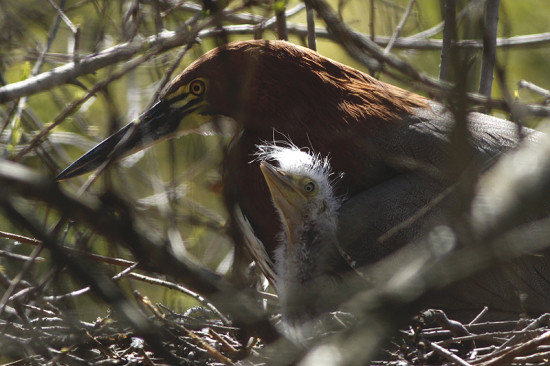
Hocó colorado/Rufescent Tiger-HeronThree chicks in three different sizes. This is because Tiger-Herons, unlike most bird species, begin to incubate immediately after the egg is laid. Since the eggs take the same number of days to develop they hatch staggeredly. This is known as asynchronous hatching and accounts for the difference in size. The oldest chick is almost a month old.
© Claudia y Tito Di Mauro
Red-crested Cardinal
Paroaria coronata
Cardenal común/Red-crested CardinalIn nest
© Claudia y Tito Di Mauro
Red-gartered Coot
Fulica armillata
Gallareta ligas rojas/Red-gartered CootFeeding the chicks
© José Luis Merlo
Gray-breasted Martin
Progne chalybea
Golondrina doméstica/Gray-breasted MartinGray-breasted Martins have arrived …
© Roberto Ares
Gray-breasted Martin
Progne chalybea
Golondrina doméstica/Gray-breasted Martin…and packed the antenna, the meeting place.
© Roberto Ares
Southern Lapwing
Vanellus chilensis
Tero común/Southern LapwingWe did not spot the nest but here is the proof. One of the two chicks, very well camouflaged, under the adult’s supervision.
© Roberto Ares
Rufescent Tiger-Heron
Tigrisoma lineatum
Hocó colorado/Rufescent Tiger-HeronFollowing the development of the heron chicks. They are three weeks old.
© Carlos Gonzalez Ledo
Lake Duck
Nomonyx dominica
Pato fierro/Lake DuckMale
© Roberto Ares
Glittering-bellied Emerald
Chlorostilbon aureoventris
Picaflor común/Glittering-bellied EmeraldMale
© Carlos Gonzalez Ledo
VN:F [1.9.22_1171]
Rating: 7.0/10 (3 votes cast)
VN:F [1.9.22_1171]
Rating: +1 (from 1 vote)
Rufous-sided Crake
Laterallus melanophaius

Burrito común/Rufous-sided Crake
© Jorge García Vicente
Vermilion Flycatcher
Pyrocephalus rubinus
Churrinche/Vermilion FlycatcherFirst Vermilion Flycatcher of the season?
© Carlos Gonzalez Ledo

Rufescent-Tiger Heron
Tigrisoma lineatum
Hocó colorado anidando/Rufescent Tiger-Heron nestingRufescent-Tiger Heron sitting on eggs.
© Carlos Gonzalez Ledo
Rufescent-Tiger Heron-juvenile
Tigrisoma lineatum
Hocó colorado juvenil/Rufescent Tiger-Heron JuvenileWandering very near the nest.
© Carlos Gonzalez Ledo
Chalk-browed Mockingbird
Mimus saturninus
Calandria grande/Chalk-browed MockingbirdMelanistic bird. Conspicuous darkening on the face and the wings. This abnormal colouration is due to an excess of melanin.
© Mirta Ragonesi
Black-necked Swan with chick
Cygnus melancoryphus
Cisne cuello negro/Black-necked SwanAdult swans often carry their chicks on their back.
Chicks get on board by anchoring their head to the adult´s body and use their legs to crawl up to a safe place.
© Mirta Ragonesi
Yellow-browed Tyrant
Satrapa icterophrys
Suirirí amarillo/Yellow-browed Tyrant© Carlos Gonzalez Ledo
Harris’s Hawk
Parabuteo unicinctus
Gavilán mixto/Harris's Hawk© Mirta Ragonesi
Red-gartered Coot
Fulica armillata
Gallareta ligas rojas/Red-gartered CootMating
© Mirta Ragonesi
Orange-backed Troupial
Icterus croconotus
Matico/Orange-backed Troupial© Carlos Gonzalez Ledo
Scarlet-headed Blackbird
Amblyramphus holosericeus
Federal/Scarlet-headed BlackbirdJuvenile and adult
© Jorge García Vicente
Sayaca Tanager
Thraupis sayaca
Celestino/Sayaca Tanager© Carlos Gonzalez Ledo
Green-winged Saltator
Saltator similis
Pepitero verdoso/Green-winged Saltator© Carlos Gonzalez Ledo
Picazuro Pigeon
Columba picazuro
Paloma picazuró/Picazuro PigeonThis Picazuro shows the precision and exactitude for a controlled landing.
Vertical position with open wings and spread tail for braking.
Forwardly extended legs for the final phase: impact against the branch.
© José Luis Merlo
New birthsNuevos nacimientos/New births© Roberto Ares
VN:F [1.9.22_1171]
Rating: 10.0/10 (3 votes cast)
VN:F [1.9.22_1171]
Rating: +2 (from 2 votes)
Black-necked Swan
Cygnus melancoryphus
Cisne cuello negro/Black-necked SwanTo open a breeding season: a cygnet.
© Roberto Ares
Scarlet-headed Blackbird
Amblyramphus holosericeus
Federal/Scarlet-headed BlackbirdJuvenile
© Claudia Furman
Long-tailed Reed-Finch
Donacospiza albifrons
Cachilo canela/Long-tailed Reed-Finch© Jorge García Vicente
Roadside Hawk
Buteo magnirostris
Taguató común/Buteo magnirostris© Mirta Ragonesi
Rufous-bellied Thrush
Turdus rufiventris
Zorzal colorado/Rufous-bellied ThrushLeucism on external rectrix.
© Jorge García Vicente
Saffron Yellow-Finch
Sicalis flaveola
Jilguero dorado/Saffron Yellow-FinchMale and Female
© Mirta Ragonesi
Ultramarine Grosbeak
Cyanocompsa brisonii
Reinamora grande/Ultramarine Grosbeak© José Luis Merlo
Yellow-billed Cardinal
Paroaria capitata
Cardenilla/Yellow-billed Cardinal© José Luis Merlo
Rufous Hornero
Furnarius rufus
Hornero/Rufous HorneroThree stages in the construction of the oven with a week difference. The partition wall is still to be built.
© Carlos Gonzalez Ledo
Rufous Hornero
Furnarius rufus
Hornero/Rufous HorneroNote there is an incipient partition wall on the left. When they resumed work almost two weeks later, they changed its position to the right. Unlike the rest of the oven which is built from bottom to top, the partition wall is built in vertical strips.
© Carlos Gonzalez Ledo
New species: Long-tailed Meadowlark
Sturnella loyca
Loica común/Long-tailed MeadowlarkThough taken almost two years ago, it is a most valuable record to the site.
© Germán Pugnali
Unicolored Blackbird
Agelasticus cyanopus
Varillero negro/Unicolored BlackbirdComposite: Male and Female
© Jorge García Vicente
Green-winged Saltator
Saltator similis
Pepitero verdoso/Green-winged Saltator© Claudia y Tito Di Mauro
Southern Screamer
Chauna torquata
Chajá/Southern Screamer© Claudia y Tito Di Mauro
Coscoroba Swan
Coscoroba coscoroba
Coscoroba/Coscoroba SwanThe position of this bird in the phylogenetic tree is being questioned. Genetic studies suggest that it is basal (more primitive) to the swans, but that it is closely related to the Cape Barren Goose. This standing bird looks more like a goose than a swan. Its legs are longer and are placed more at the center of the body, which gives it a more straight posture. Other differences with swans are the bill and the lack of caruncle.
© Carlos Gonzalez Ledo
Yellow-browed Tyrant
Satrapa icterophrys
Suirirí amarillo/Yellow-browed Tyrant© Jorge García Vicente
Yellow-chevroned Parakeet
Brotogeris versicolurus
Catita chirirí/Yellow-chevroned Parakeet© Jorge García Vicente
European Starling
Sturnus vulgaris
Estornino pinto/European StarlingAfter the molt the new feathers of the starling have white tips, which gives it a mottled aspect. With time mottles disappear because the tips wear off.
© Claudia y Tito Di Mauro
Guira Cuckoo
Guira guira
Pirincho/Guira cuckooA typical scene in cold weather: Guira Cuckoos huddle up to keep warm.
© Jorge García Vicente
Sulphur-bearded Spinetail
Cranioleuca sulphurifera
Curutié ocráceo/Sulphur-bearded Spinetail© Jorge García Vicente
Yellow-winged Blackbird
Agelasticus thilius
Varillero ala amarilla/Yellow-winged BlackbirdMale
© Claudia Furman
Yellow-winged Blackbird
Agelasticus thilius
Varillero ala amarilla/Yellow-winged BlackbirdFemale
© Jorge García Vicente
VN:F [1.9.22_1171]
Rating: 10.0/10 (2 votes cast)
VN:F [1.9.22_1171]
Rating: +3 (from 3 votes)
Powered by WordPress Web Design by SRS Solutions © 2013 Reserva Ecológica Costanera Sur Desarrollado por Honou software