News - February 2012
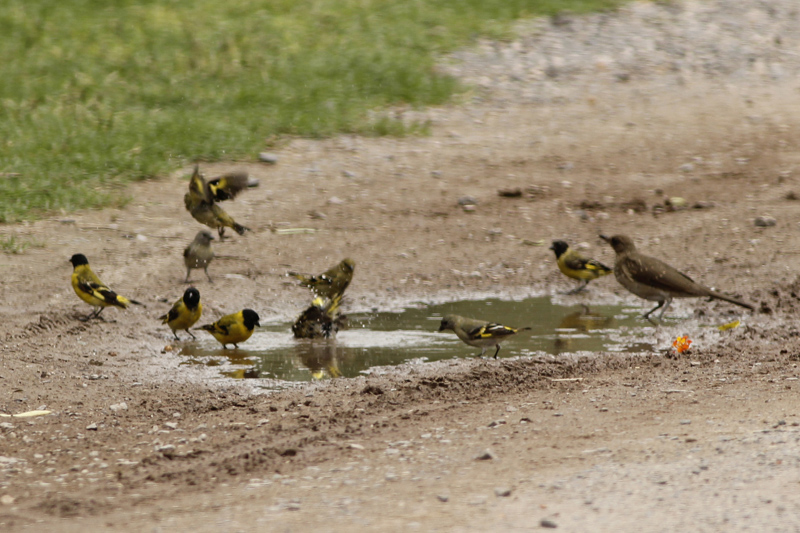
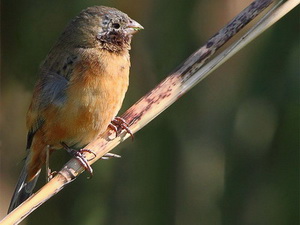
A small flock having a bath accompanied by a creamy-bellied thrush
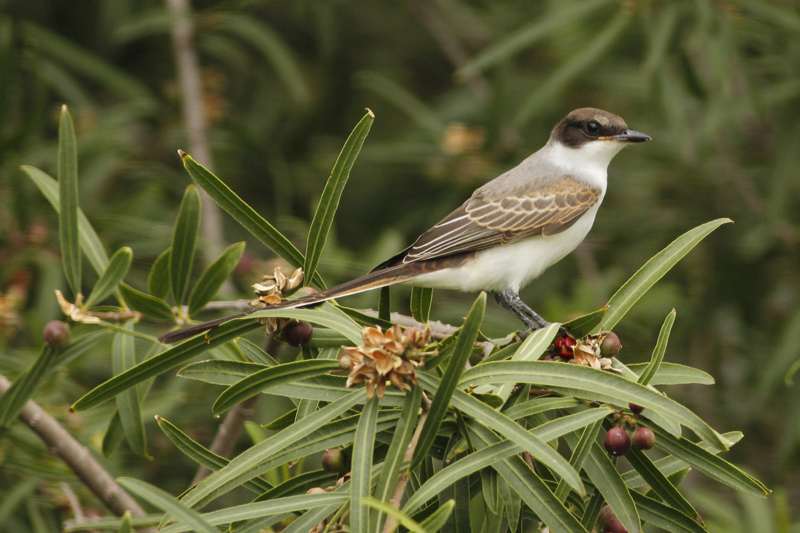

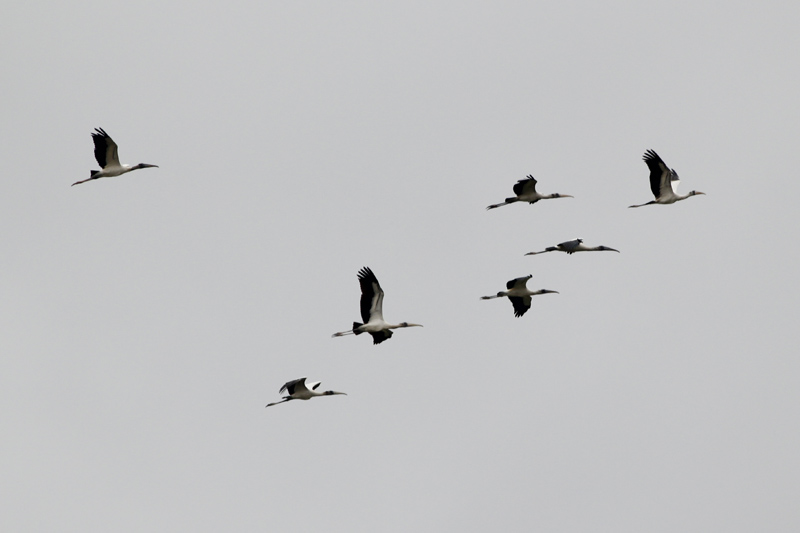
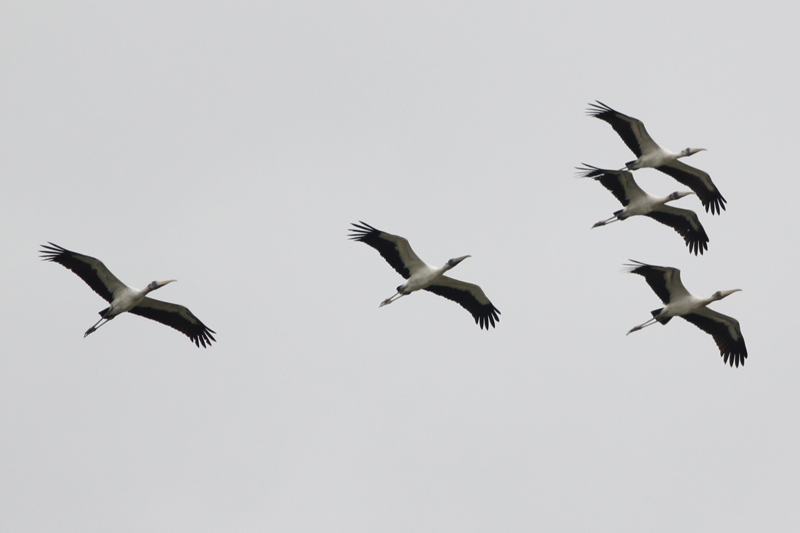
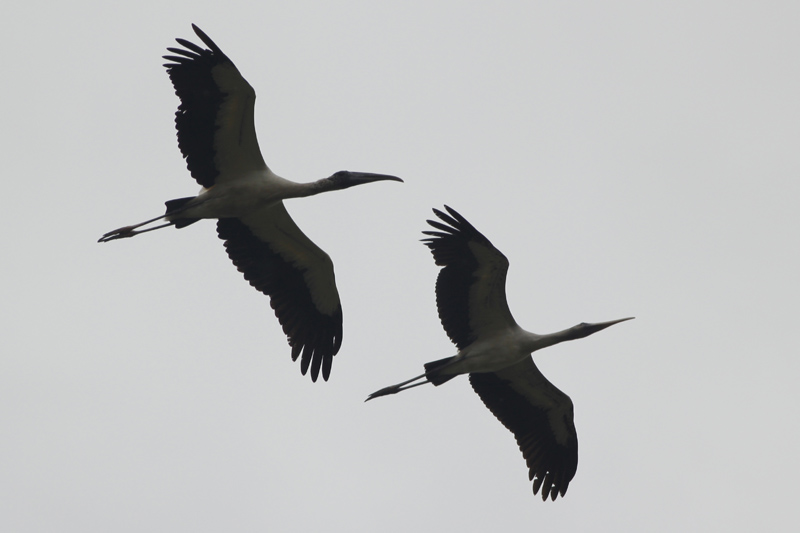
Migration (See in full screen)
We were reaching the cement pitch when a first group of six Fork-tailed Flycatchers, which I could not see, flew past over our heads. They were heading north. A bit later a front of several flycatchers emerged out of the top of the trees which flank the path. Flying low they dodged and mixed with pigeons, martins and other birds that are normally there. In a more or less disorderly way they progressed in a northerly direction and we lost sight of them. And a new wave appeared and so went on the bouts with dozens of flycatchers each. We were amazed at the number of individuals thay flew past. It was a feast. Some sat for a while on a branch and resumed flight with the same group or with the following one. Juvenile and female tails (18cm) outnumbered male tails (34 cm), a considerable difference in size. Several males had one of their rectrices broken. One of them was filmed during a stop. Such a flow of individuals could be nothing else but migration. In their migration route to the south the groups which spread out from the principal trunk aggregate again on their return trip gathering at roosting sites. Now in bigger quantities since juveniles born here also join the group. Is Costanera one of these favoured sites? For my part, this is the first time I have seen the migration of Fork-tailed Flycatchers. Of course, this is so short a time window that one must be at the right time and place to witness it.
There are four subspecies of Fork-tailed Flycatchers having different migratory behaviour. The one that migrates to Argentina (<em>Tyrannus savana savana</em>) comes from the northern extreme of South America and is highly migratory. There is a transient species and the other two are resident. <em>Tyrannus savana savana</em> arrives in September-October to spend summer. Here it breeds and returns in February-March to winter in the north. Last year’s first photographic record was in October. Today, the 20th of February we saw them leave.
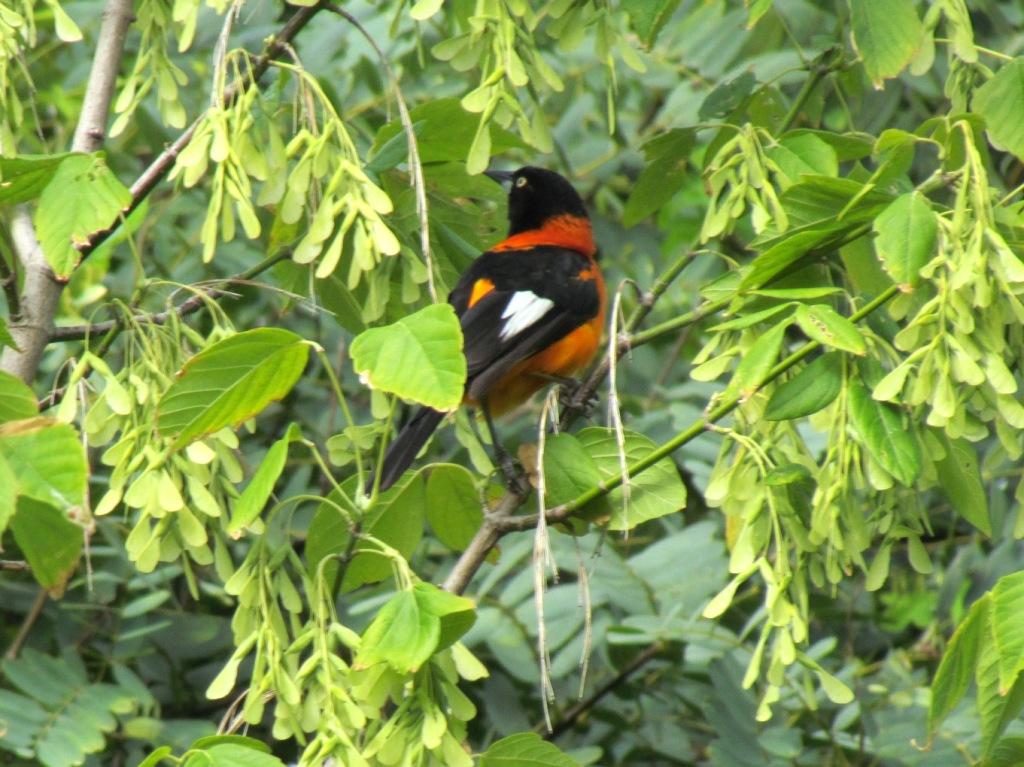
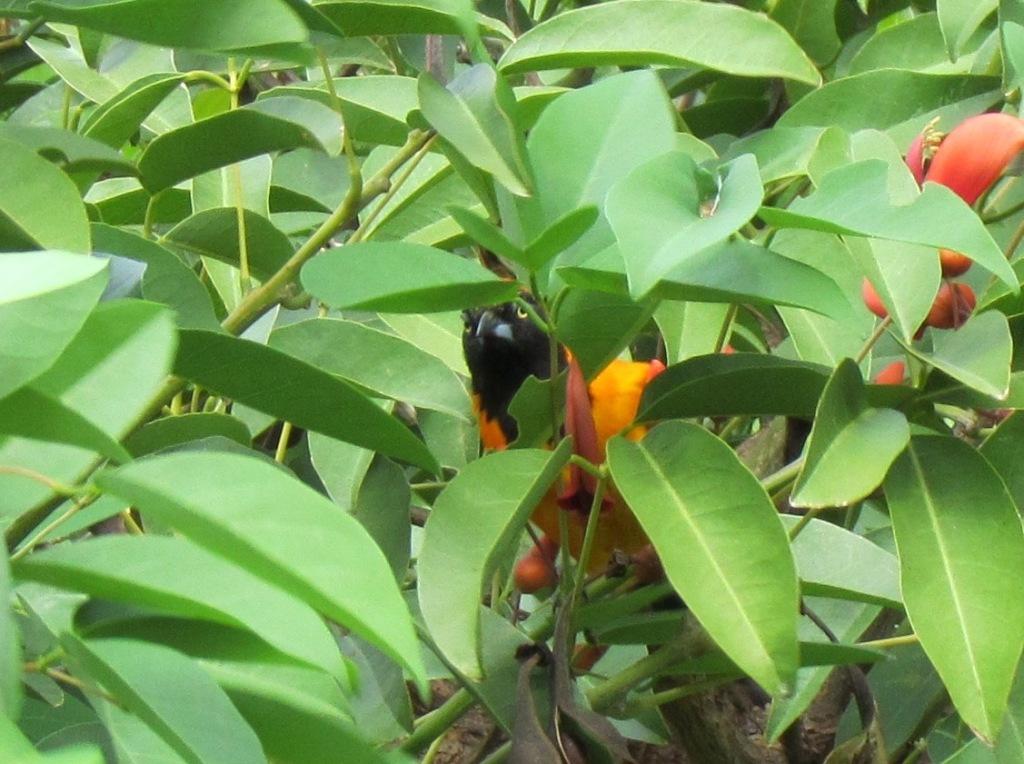
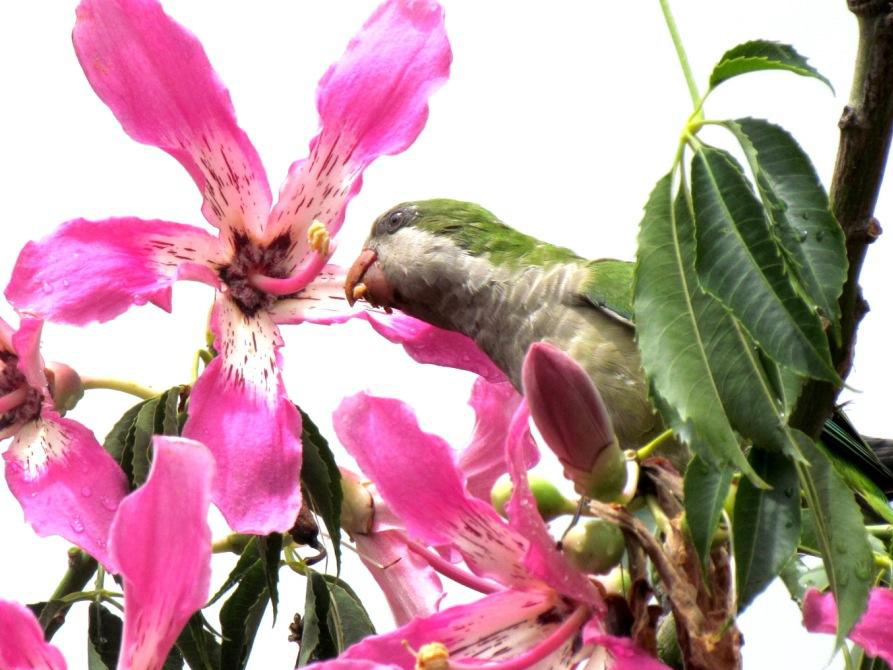
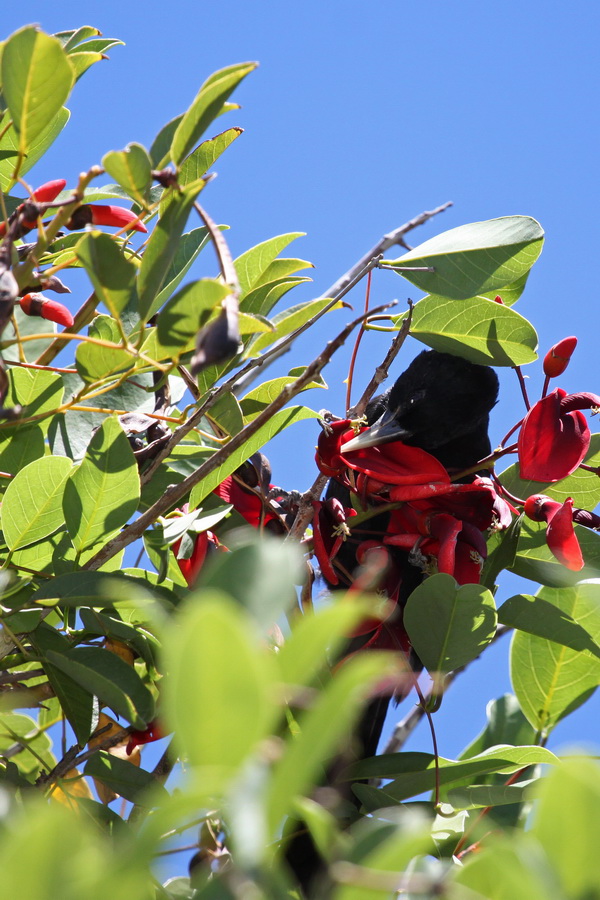
Eating flower of silk floss tree Chorisia speciosa
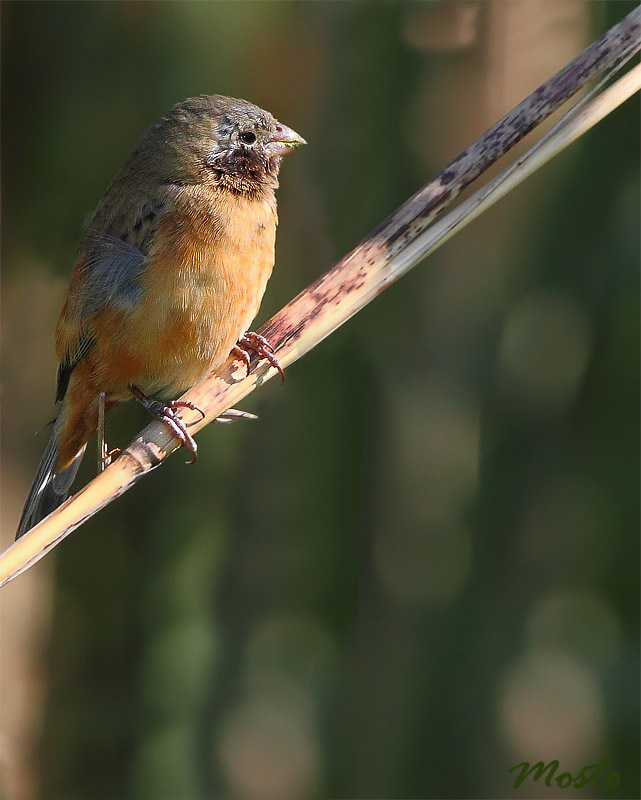
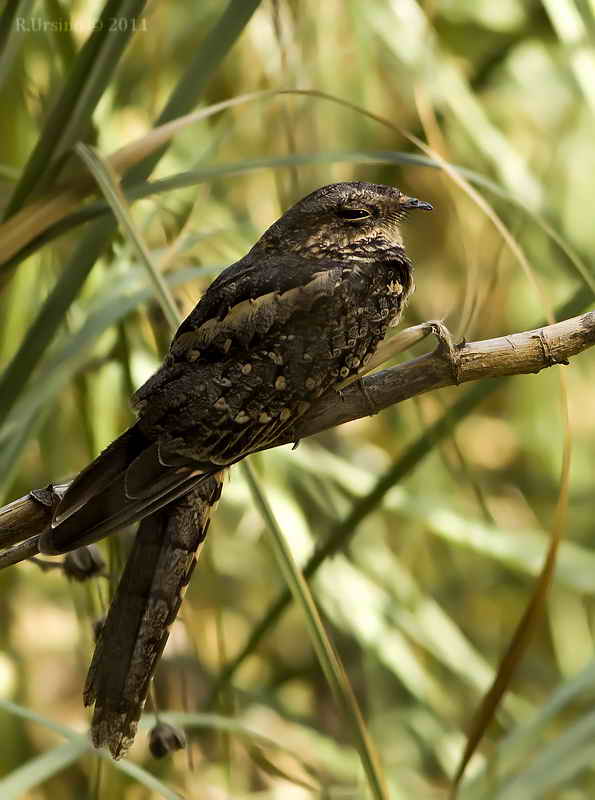
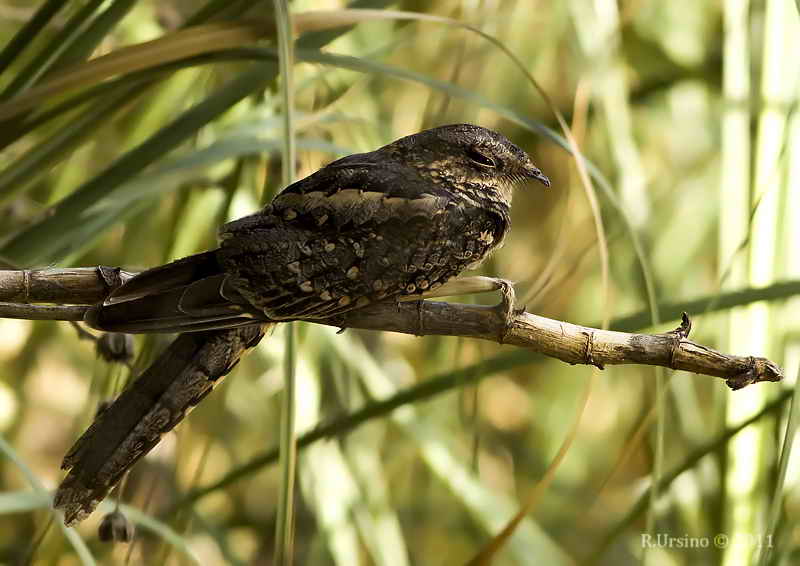
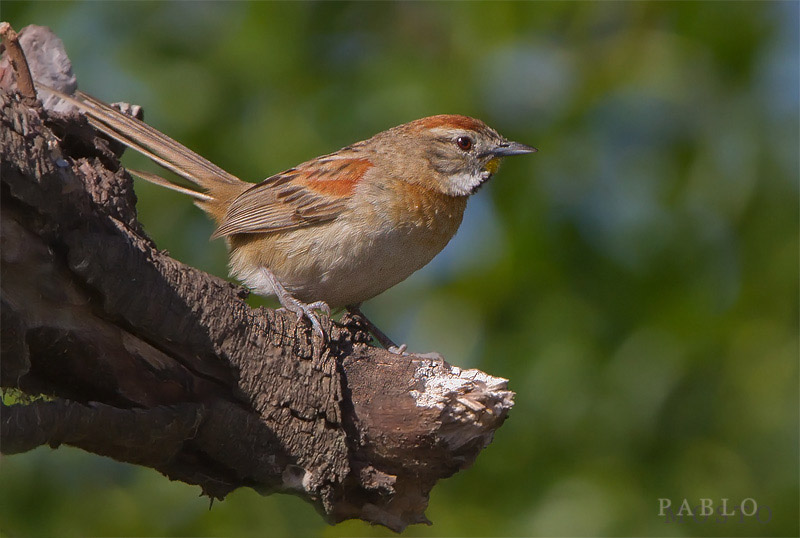
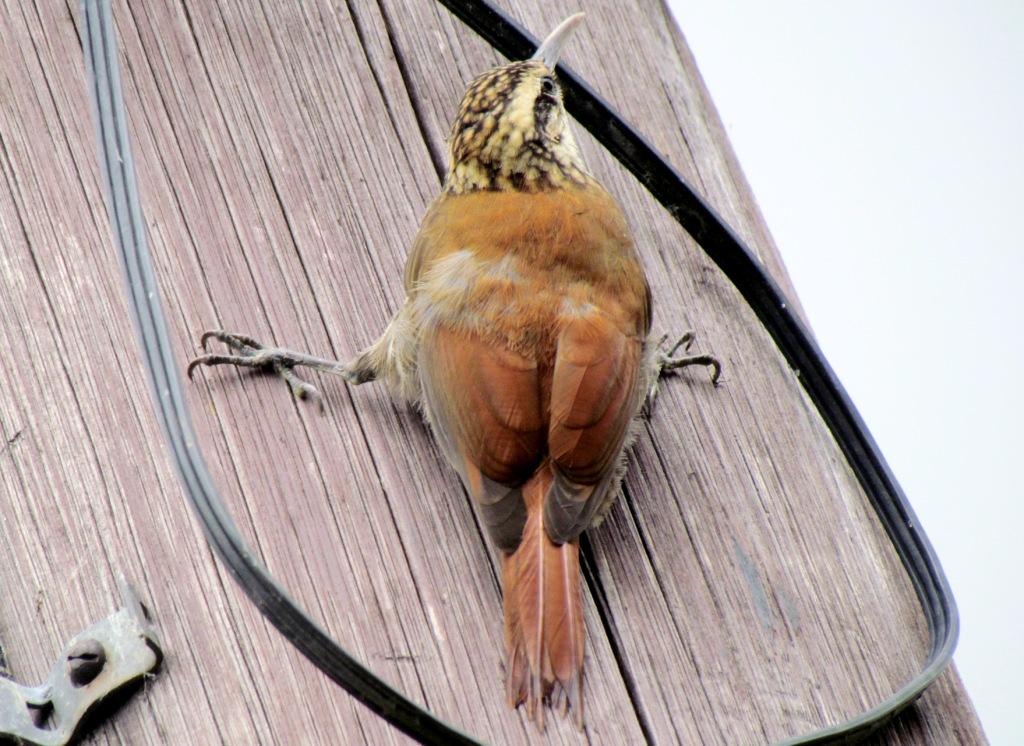
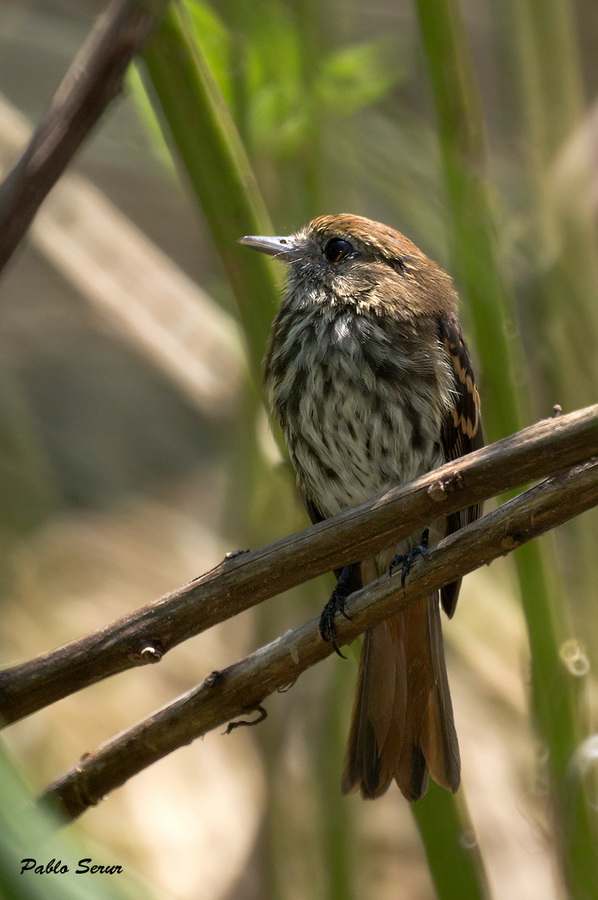
The Chotoy Spinetail appeared from time to time at Costanera. Last October it popped up and stayed to breed. During that time it was difficult to capture images since it moved surreptitiously so as not to be discovered. Here, instead, we can fully appreciate this relative of the Rufous Hornero. Long tail with two spines. Rufous crown and shoulders. Yellow chin and black throat flanked white.
Aves non gratae
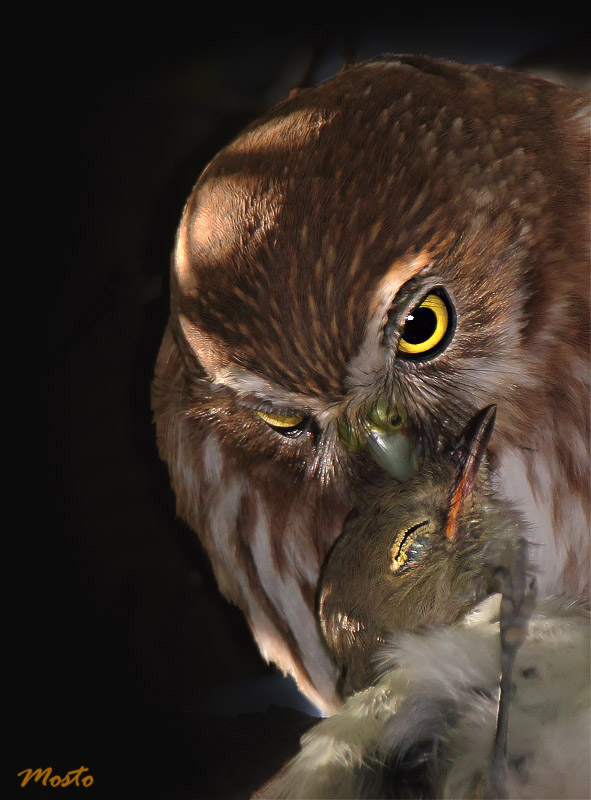
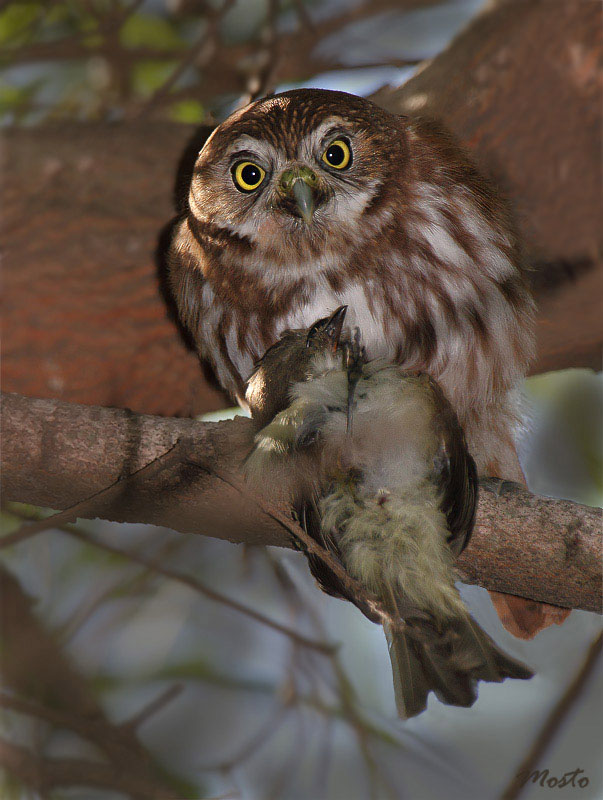
Among the bird species present at Costanera the Southern Caracara and the Ferruginous Pygmy-Owl are considered unwanted because they prey on birds, among other things. The birds know the risk they run when either of them are close. So they take courses of action that differ from one another.<
The Southern Caracara is stalked either solitarily or in pairs by the Chalk-browed Mockingbird (25 cm) and the Fork-tailed Flycatcher (38 cm) among other birds. They mob on the Caracara till it is driven away. It is chased and even pecked at on the wing. It seems funny to see how the big Caracara is driven away by a much smaller bird. Unlike the Caracara, the Ferruginous Pygmy-Owl is small in size (15 cm) and is harrassed by several bird species. The owl's attitude is "I won't move". It stays undaunted in its place. There is a disconcerted flight around it with insisten screaming. A sort of public protest so noisy that it is a useful signal for observers to spot the owl. Otherwise, this small and cryptic bird is easily skipped in a tree.
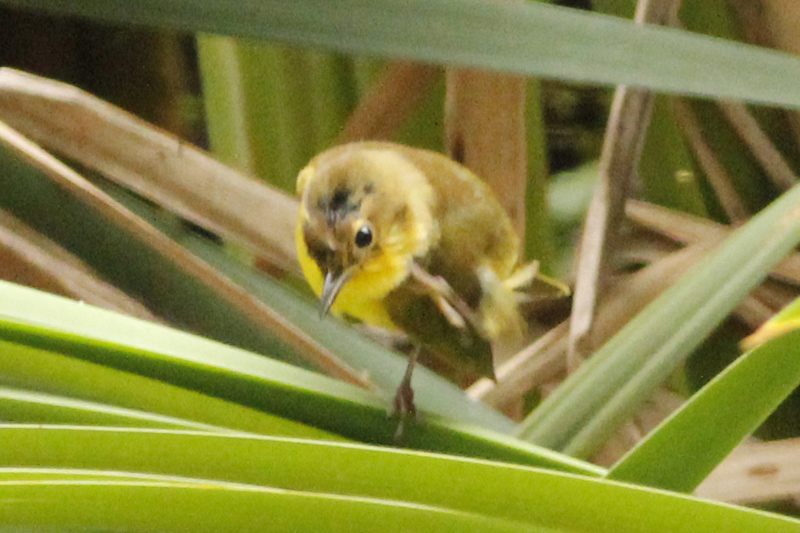
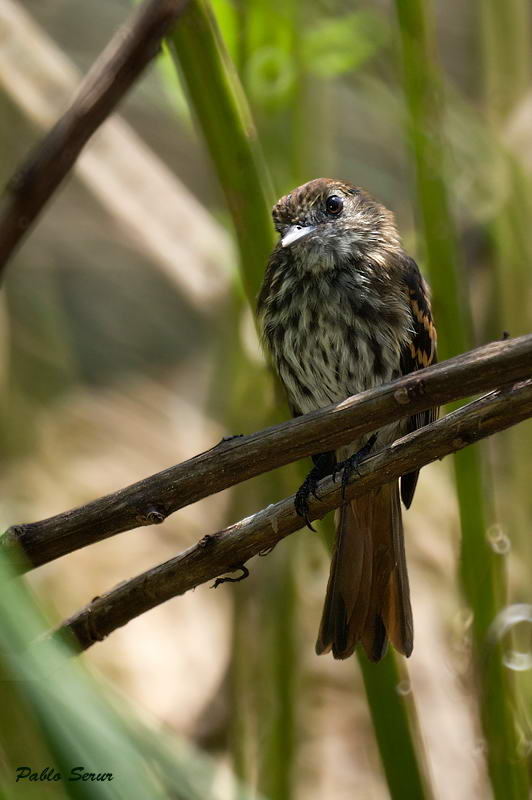
In this case there was a Red-eyed Vireo, a male Masked Yellowthroat, a Small-billed Elaenia, a Streaked Flycatcher (not appearing in the video), three Masked Gnatcatchers and several Emeralds (definitely some females). All of them sounded very altered. The feathered ball which appears under the branch is the juvenile Small-billed Elaenia of the above photos. It held it tightly with the claws and stood motionless only moving its head to keep visual contact with the birds flying by. None of them attacked the owl. They only put pressure by flying very close to it. At a point it moved to another branch and stood there for a while till it left
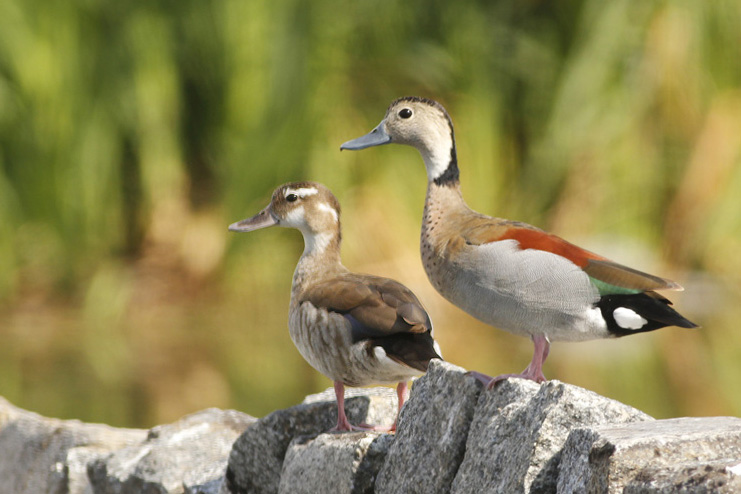
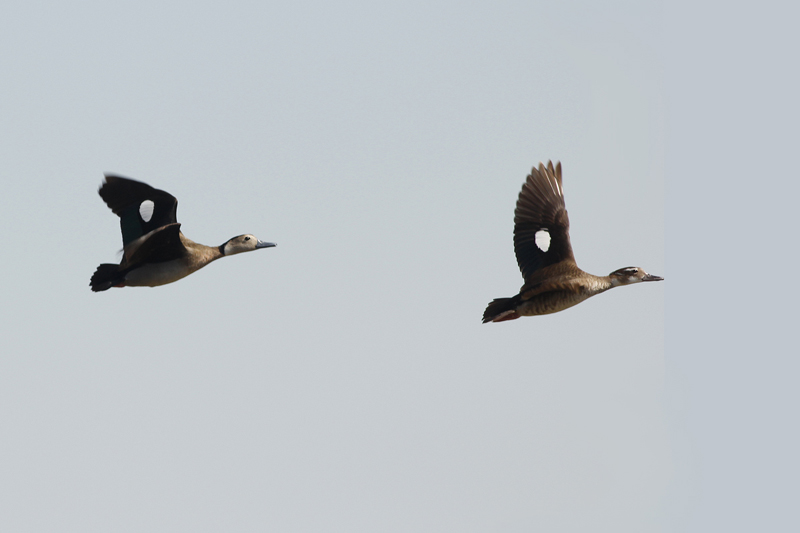
With open wings circular white patch is clearly seen
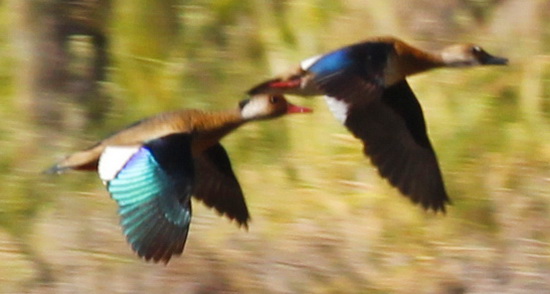
White triangular patch and blue or green speculum
The silk floss tree Ceiba speciosa at the Viamonte Access is loaded with flowers. Joy to our eyes and a nutritious food source for the hummingbirds. There were a gilded sapphire (bronze colour) and a female glittering-bellied emerald (with grayish underparts), some time later a male showed up, too. The gilded sapphire defended from the competitors what it considered its tree. As the sapphire identified an intruder it pounced on it to drive it away. The intruder reacted by escaping and the sapphire escorted it to make sure it left the grounds. But success was temporary since the emerald was back in no time and the sequence was repeated. When the male glittering-bellied gmerald showed up things got worse for the sapphire, now there were two intruders to be expelled from its territory. The movement of hummingbirds is so fast that only these scenes could be rescued. Among them, two chases
| February 2nd - World Wetlands Day |
| This day in 1971 in Ramsar, Iran, a treaty on wetlands was signed. It provides a framework for the conservation and sustainable use of their resources. Wetlands are defined as extensions where water is a crucial element and its regime (permanent or temporal water, tides, etc.) defines the structure and ecological functions of the place, be it lakes, rivers, swamps, marshes, marine areas, man-made sites, etc. Argentina joined the Convention on 4th of September 1992. The first site was the Monumento Natural Laguna de los Pozuelos in Jujuy. Reserva Costanera is the 14th site and was included on the list on 22nd of March 2005. Nowadays Argentina has 20 sites on the list. Joining the Convention implies a commitment on the part of the National Government to actively work to secure conservation and sustainable use of the area in question. |